

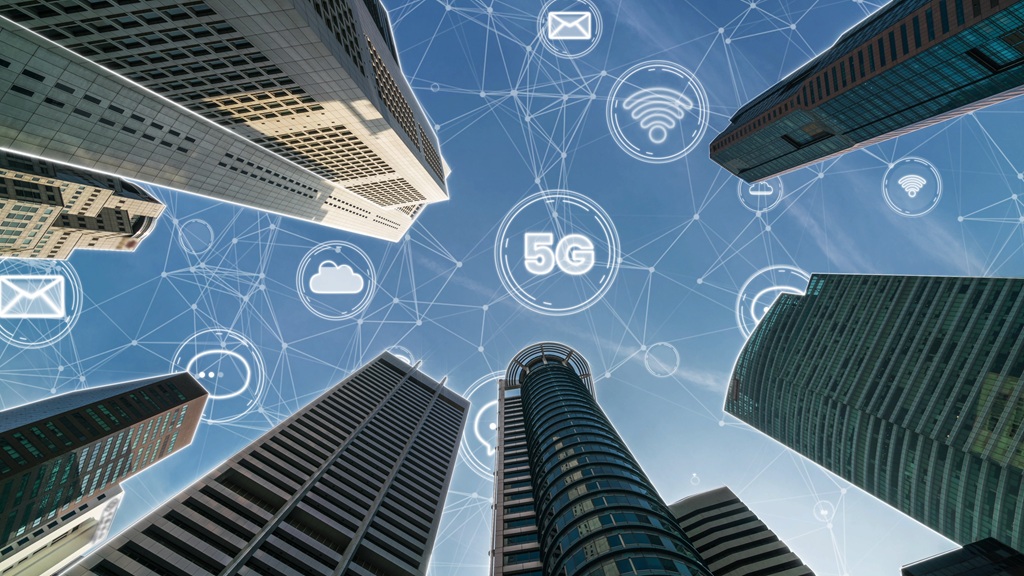
What Is the Internet of Things (IoT)?
The Internet of Things (IoT) refers to a global network of physical devices from industrial sensors to smart building controllers embedded with software, connectivity modules, and data-processing capabilities. These IoT devices communicate with each other and with centralized systems to enable automated decision-making, real-time monitoring, and data-driven operations without constant human intervention.
In practical terms, IoT transforms conventional equipment into intelligent assets. A conveyor belt in a manufacturing plant, a chiller unit in a commercial tower, or a delivery vehicle on a highway can each become a live data source continuously broadcasting performance metrics, location data, and environmental readings to enterprise management platforms.
How IoT Works: Sensors, Connectivity, and Intelligence
Every IoT solution is built on three foundational layers:
- Perception layer – Internet of Things sensors and actuators that collect physical data such as temperature, pressure, motion, and energy consumption.
- Network layer – communication protocols (Wi-Fi, 5G, LoRaWAN, Zigbee) that transmit data from devices to processing platforms.
- Application layer – cloud dashboards, enterprise software, and AI analytics engines that convert raw data into actionable intelligence.
At the most advanced level, IoT at the edge enables data processing directly on or near the device, reducing latency, minimizing bandwidth usage, and supporting real-time responses even without continuous cloud connectivity. This architecture is particularly critical for time-sensitive applications in manufacturing and infrastructure management.
IoT at the Edge vs Cloud IoT: Key Differences
| Feature | IoT at the Edge | Cloud-Only IoT |
|---|---|---|
| Latency | Near-zero (local processing) | Variable (network dependent) |
| Data Privacy | Processed on-site | Transmitted to remote servers |
| Bandwidth Use | Minimal | High |
| Offline Operation | Yes, continues uninterrupted | No, requires connectivity |
| Ideal For | Manufacturing floors, critical infrastructure | Analytics dashboards, reporting |
IoT Use Cases by Industry in Dubai, UAE
Across Dubai, UAE, organizations are deploying IoT devices at scale to drive operational efficiency, meet sustainability mandates, and align with the UAE’s national digitalization agenda. The table below summarises key applications by sector:| Sector | IoT Application | Key Benefit |
|---|---|---|
| Smart Manufacturing | Predictive maintenance, production line monitoring | Reduced downtime, lower maintenance costs |
| Commercial Buildings | HVAC automation, occupancy sensing, access control | Energy savings of up to 30% |
| Logistics & Warehousing | Asset tracking, cold chain monitoring, route optimization | Real-time inventory accuracy |
| Energy Management | Smart metering, demand response, solar integration | Reduced utility spend, sustainability reporting |
| Retail & Hospitality | Environmental controls, footfall analytics, smart lighting | Improved guest experience, cost efficiency |
Smart Manufacturing and Predictive Maintenance
In industrial environments, Internet of Things sensors are embedded directly into machinery, production lines, and environmental controls. Vibration sensors detect early signs of mechanical stress; thermal imaging flags overheating components; flow meters monitor fluid throughput in real time. This continuous data stream feeds predictive maintenance models that alert engineering teams to potential failures before they occur, dramatically reducing unplanned downtime and repair costs.
Pinnacle Smart Technologies delivers an integrated IoT infrastructure for manufacturers operating across Dubai, UAE, connecting IoT devices to enterprise resource planning and facility management platforms for a unified operational view. Learn more about our facility management solutions.
Smart Building Management and Energy Optimization
Commercial real estate in Dubai increasingly depends on connected infrastructure to manage energy consumption, occupant comfort, and regulatory compliance. An end-to-end IoT solution for a commercial tower might include occupancy-linked HVAC scheduling, automated lighting zones, sub-metered energy dashboards, and leak detection systems, all accessible through a single building management interface.
Pinnacle Smart Technologies designs and implements smart building ecosystems that integrate seamlessly with existing BMS platforms. Explore our building automation services and energy management capabilities.
Logistics, Cold Chain, and Asset Tracking
For logistics operators, IoT at the edge enables shipment-level monitoring without reliance on centralized data centres. GPS-enabled Internet of Things sensors track assets across the supply chain; temperature and humidity monitors ensure cold chain integrity for pharmaceuticals and perishables; geofencing alerts flag unauthorized route deviations in real time.
These capabilities are increasingly essential for businesses operating under the UAE’s evolving trade and compliance frameworks. Pinnacle Smart Technologies helps logistics providers in Dubai, UAE deploy scalable, standards-compliant IoT tracking infrastructure.

Why Pinnacle Smart Technologies for IoT Implementation?
Pinnacle Smart Technologies is a technology solutions partner serving enterprise clients across the UAE. Our IoT solution practice covers end-to-end deployment from sensor selection and network design to platform integration, dashboarding, and ongoing support. We work across sectors, including manufacturing, real estate, retail, logistics, and government.
Our approach prioritises security, scalability, and integration with existing enterprise systems, ensuring your Internet of Things (IoT) investment delivers measurable ROI from day one. Visit pinnacledxb.com to speak with our team or explore our IoT and smart infrastructure services.
Frequently Asked Questions (FAQs)
1. What is the Internet of Things (IoT) in simple terms?
The Internet of Things (IoT) is a network of physical devices from sensors and machines to vehicles and building systems that are connected to the internet and share data with each other automatically, enabling smarter decisions without manual intervention.
2. How is IoT used in smart manufacturing?
In manufacturing, IoT devices are embedded in machinery to monitor performance in real time. Sensors detect vibration, heat, and pressure anomalies, feeding data into predictive maintenance systems that alert teams to potential failures before they cause costly downtime.
3. What is the difference between IoT at the edge and cloud IoT?
IoT at the edge processes data directly on or near the device, enabling near-zero latency and offline operation critical for manufacturing floors and real-time safety systems. Cloud IoT transmits data to remote servers for analytics and reporting, but depends on continuous connectivity.
4. How does IoT help with energy management in commercial buildings?
IoT-connected building systems including smart meters, occupancy sensors, and automated HVAC controls monitor and adjust energy consumption in real time. This can reduce a commercial building's energy costs by up to 30% compared to conventional manual management.
5. How can Pinnacle Smart Technologies help my business implement an IoT solution?
Pinnacle Smart Technologies provides end-to-end IoT implementation from sensor selection and network design to platform integration and ongoing support across manufacturing, real estate, logistics, retail, and government sectors in the UAE.